Claude Opus 5 is a big jump — and it makes the plan matter more

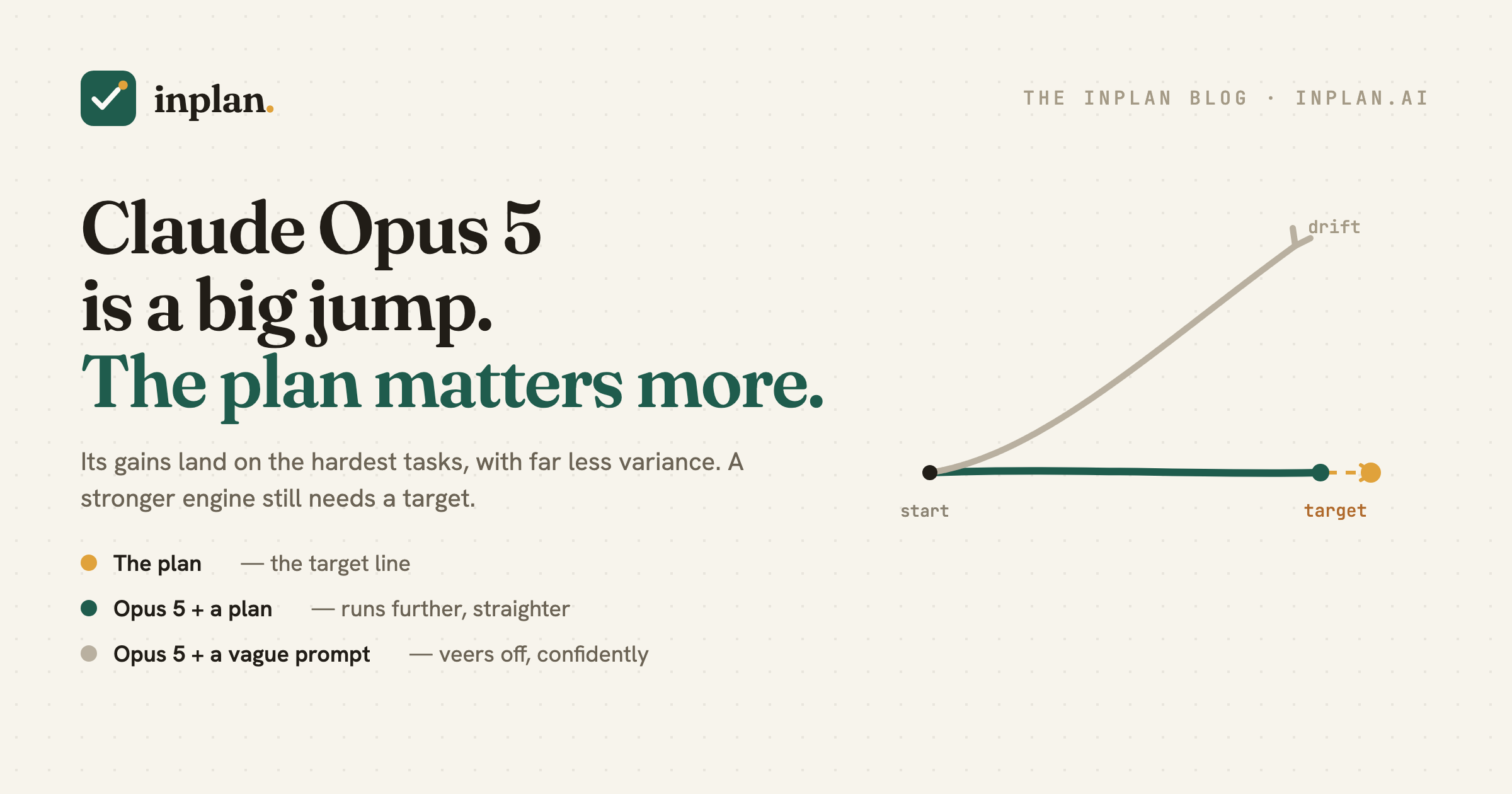
Anthropic shipped Claude Opus 5 on July 24 — by most reports the new frontier, topping the Artificial Analysis Intelligence Index at roughly half the cost of the previous leader. The instinct, every time a stronger model lands, is that planning matters less now — surely a smarter agent needs less hand-holding. Look at where Opus 5 actually improved, though, and the opposite is true.
The gains land where the decisions are hardest
Opus 5's headline isn't that it's a bit better at everything — it's that it's meaningfully better at the hard, long-horizon agentic tasks: the multi-file, many-step work where earlier models drifted. That's exactly the regime where a vague prompt hurts most. A hard task is a task with a lot of decisions in it, and a more capable agent will carry those decisions further before you see the result — correct or wrong. A stronger model executes a good plan further; hand it a bad one and it builds the wrong thing faster, and more convincingly. Capability raises the stakes on getting the intent right, it doesn't remove them.
“Far less variance run to run” — meet the other half
One detail from the early reactions is worth sitting with. Testers noted Opus 5 solving the hardest agentic problems “with far less variance run to run.” That's a real gift — but it's only half of the variance you care about. There are two kinds: the model's execution variance (same prompt, different program) and your intent variance (you never pinned down which program you wanted). Opus 5 shrinks the first. Nothing about a better model shrinks the second — that's on the spec. This is the same thing we measured directly: a detailed plan makes even a non-deterministic model reproduce nearly the same result every run. Opus 5 cuts execution variance; a plan cuts intent variance; together you finally get output that's both consistent and the thing you meant.
A better model makes the agent more sure of itself. Only a plan makes it sure of the right thing.
A higher ceiling just moves the bottleneck
Every capability jump relocates the constraint. When the model was the weak link, a better model was the highest-leverage upgrade. Opus 5 mostly retires that excuse — which means the bottleneck moves, cleanly, to shared understanding: who the user is, what the feature is for, which of two reasonable designs is right here. Those aren't things a bigger model knows; they're things you decide. The stronger the agent, the more of your project it will build off a single decision — so the decision had better be written down and right.
What to actually do with Opus 5
Point its stronger agentic loop at a target it can't mistake. Resolve the plan first — the feature set, the edge cases, the “done” — then hand Opus 5 the decided plan and let it run further and straighter than any model before it. That's the whole shape of inplan: the agent drafts and raises its open questions inline, you answer the ones that need a human, and Opus 5 builds against your answers instead of guessing at them. Same workflow we've always argued for; a better engine just makes it pay off faster.
The model got better. The lever didn't move.
Claude Opus 5 is a genuine step up, and worth adopting today. But “better model” and “better plan” were never competing answers — they multiply. Give the most capable coding agent yet a resolved plan and you get the best of it; give it a vague one and you get the most confident wrong turn you've ever reviewed. The plan is still the lever. It's just attached to a bigger engine now.
Give Opus 5 a plan it can't misread
inplan is where you and your coding agent resolve the plan together — the agent drafts and raises its open questions inline, you answer the ones that need a human, and it builds against your answers. Point Claude Opus 5's stronger loop at a decided target. Free and open source.
inplan on GitHub inplan.ai